


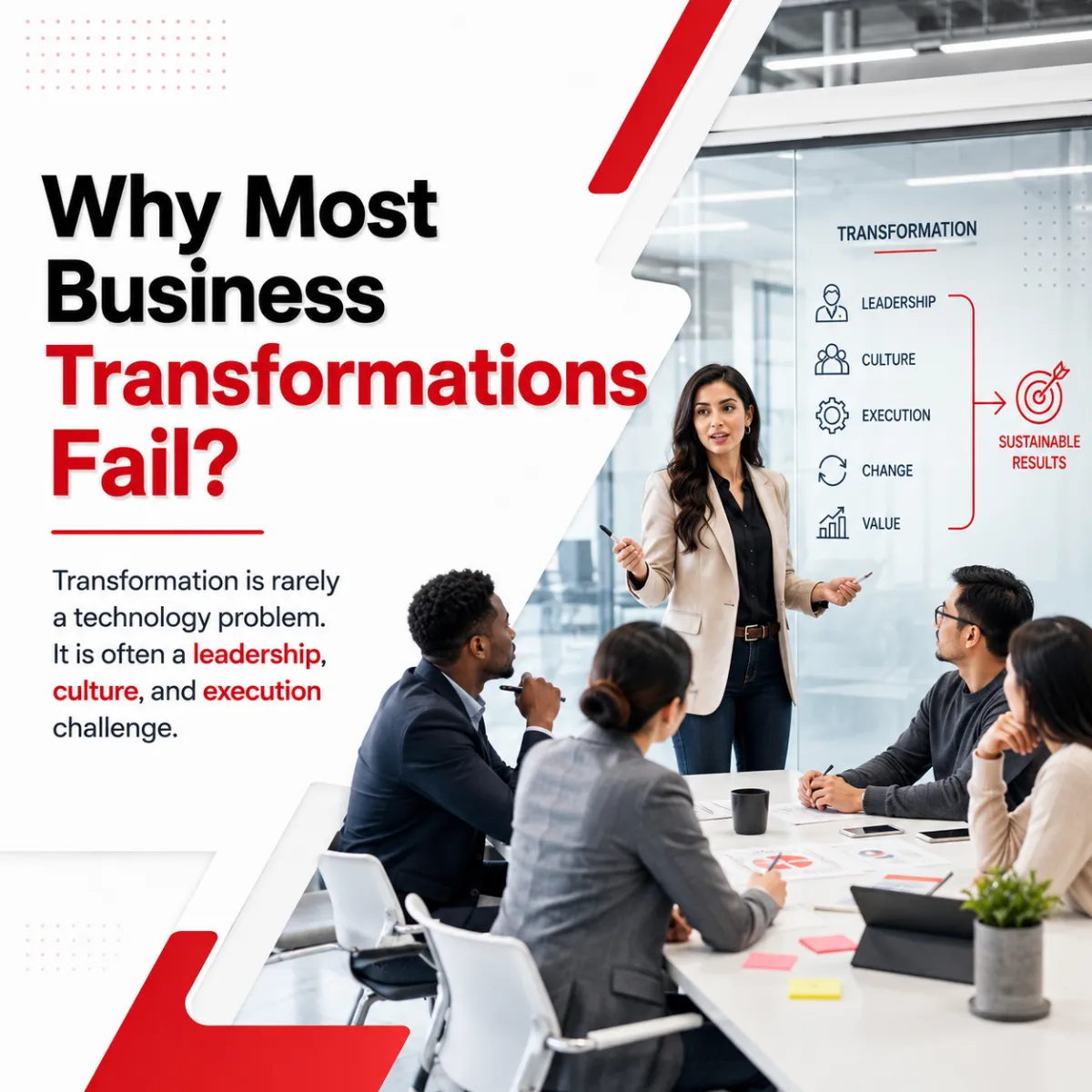
Why Most Business Transformations Fail
Organizations around the world invest heavily in business transformation. They adopt new technologies, redesign organizational structures, launch strategic initiatives, and invest in leadership development—all with the goal of becoming more competitive and resilient.
Yet many transformation efforts fail to deliver the expected results.
The reason is often misunderstood.
Transformation rarely fails because the strategy was poor or the technology was inadequate.
More often, it fails because organizations underestimate the human side of change.
At John&Partners, we believe successful business transformation happens when strategy, leadership, culture, and execution work together. Sustainable change is not achieved through technology alone—it is achieved when people embrace new ways of thinking, working, and leading.
Transformation Is More Than a Technology Project
Many organizations begin transformation by investing in new digital platforms, automation tools, or artificial intelligence.
Technology is important, but technology alone cannot transform a business.
Without clear objectives, effective leadership, and employee engagement, even the most advanced systems cannot create lasting value.
Technology enables transformation.
People make transformation successful.
Organizations that focus only on digital tools while ignoring leadership and culture often struggle to realize meaningful improvements.
Unclear Vision Creates Confusion
Every successful transformation begins with a clear purpose.
Employees need to understand:
Why change is necessary
What success looks like
How the transformation supports the organization's future
What role they play in achieving that vision
When leaders fail to communicate a compelling direction, uncertainty grows.
People may continue working as they always have because they do not understand the reason for change.
A clear vision creates alignment.
Alignment creates momentum.
Leadership Alignment Is Essential
Transformation requires consistent leadership.
One of the most common reasons transformation initiatives fail is that leaders send mixed messages or pursue competing priorities.
Successful leaders:
Support a shared vision
Communicate consistently
Demonstrate commitment through actions
Make decisions aligned with transformation goals
Hold themselves accountable
Employees pay close attention to leadership behavior.
If leaders are not aligned, organizations struggle to build trust and maintain focus.
Leadership commitment must be visible throughout the transformation journey.
Culture Determines Whether Change Lasts
Culture influences how people think, behave, and respond to change.
An organization may introduce new processes, but if the culture rewards old behaviors, employees often return to familiar ways of working.
A transformation-oriented culture encourages:
Collaboration
Learning
Accountability
Innovation
Continuous improvement
Open communication
Culture cannot be changed overnight.
It evolves through consistent leadership, clear expectations, and repeated positive behaviors.
Communication Drives Engagement
Transformation often creates uncertainty.
Employees naturally ask:
How will this affect my role?
What changes should I expect?
What support will I receive?
What happens next?
Without transparent communication, rumors and resistance increase.
Effective communication should be:
Frequent
Honest
Consistent
Two-way
Action-oriented
Leaders should not only communicate information but also listen to concerns and encourage feedback.
People are more likely to support change when they feel informed and involved.
Employees Need Capability, Not Just Instructions
Successful transformation requires new knowledge and skills.
Organizations should invest in developing capabilities through:
Training
Coaching
Mentoring
Knowledge sharing
Practical learning experiences
Providing new technology without helping people develop the skills to use it effectively often limits adoption.
Learning reduces uncertainty.
Capability increases confidence.
Confident employees contribute more effectively to transformation efforts.
Execution Is Where Many Transformations Break Down
Many organizations create excellent transformation strategies.
Fewer execute them consistently.
Execution requires:
Clear priorities
Defined responsibilities
Performance measurement
Regular progress reviews
Accountability
Continuous adjustment
Transformation is not completed during planning meetings.
It succeeds through disciplined execution over time.
Small, consistent actions often create greater long-term results than ambitious plans without follow-through.
Resistance to Change Should Be Expected
Resistance is a natural human response.
People often resist uncertainty rather than change itself.
Successful leaders acknowledge concerns instead of ignoring them.
They:
Explain the purpose of change
Address questions openly
Involve employees in improvement efforts
Celebrate progress
Recognize contributions
Building trust reduces resistance and increases commitment.
Transformation becomes more effective when people feel they are participating in the process rather than having change imposed upon them.
Measuring Progress Keeps Transformation on Track
Organizations cannot improve what they do not measure.
Transformation should include meaningful indicators such as:
Customer satisfaction
Operational efficiency
Employee engagement
Process performance
Financial outcomes
Adoption of new practices
Regular measurement helps leaders identify successes, recognize obstacles, and make informed adjustments.
Continuous review keeps transformation aligned with organizational objectives.
Coaching Accelerates Transformation
One of the most valuable tools during transformation is coaching.
Coaching helps leaders and teams:
Strengthen self-awareness
Improve communication
Navigate uncertainty
Build accountability
Develop leadership capability
Sustain behavioral change
Unlike one-time training, coaching provides ongoing support as people apply new knowledge in real business situations.
Transformation becomes sustainable when individuals continuously improve how they think, decide, and lead.
Final Takeaway
Business transformation is not simply about implementing new technology or redesigning processes.
It is about helping people adopt better ways of working together.
Organizations that succeed understand that transformation requires:
A clear vision
Aligned leadership
A supportive culture
Effective communication
Continuous learning
Disciplined execution
Ongoing measurement
Strong coaching and leadership development
At John&Partners, we believe sustainable transformation occurs when strategy, people, processes, and leadership move in the same direction.
Technology may accelerate change.
Leadership sustains it.
Because the organizations that thrive are not those with the most ambitious transformation plans.
They are the ones that consistently turn vision into action and action into lasting results.