

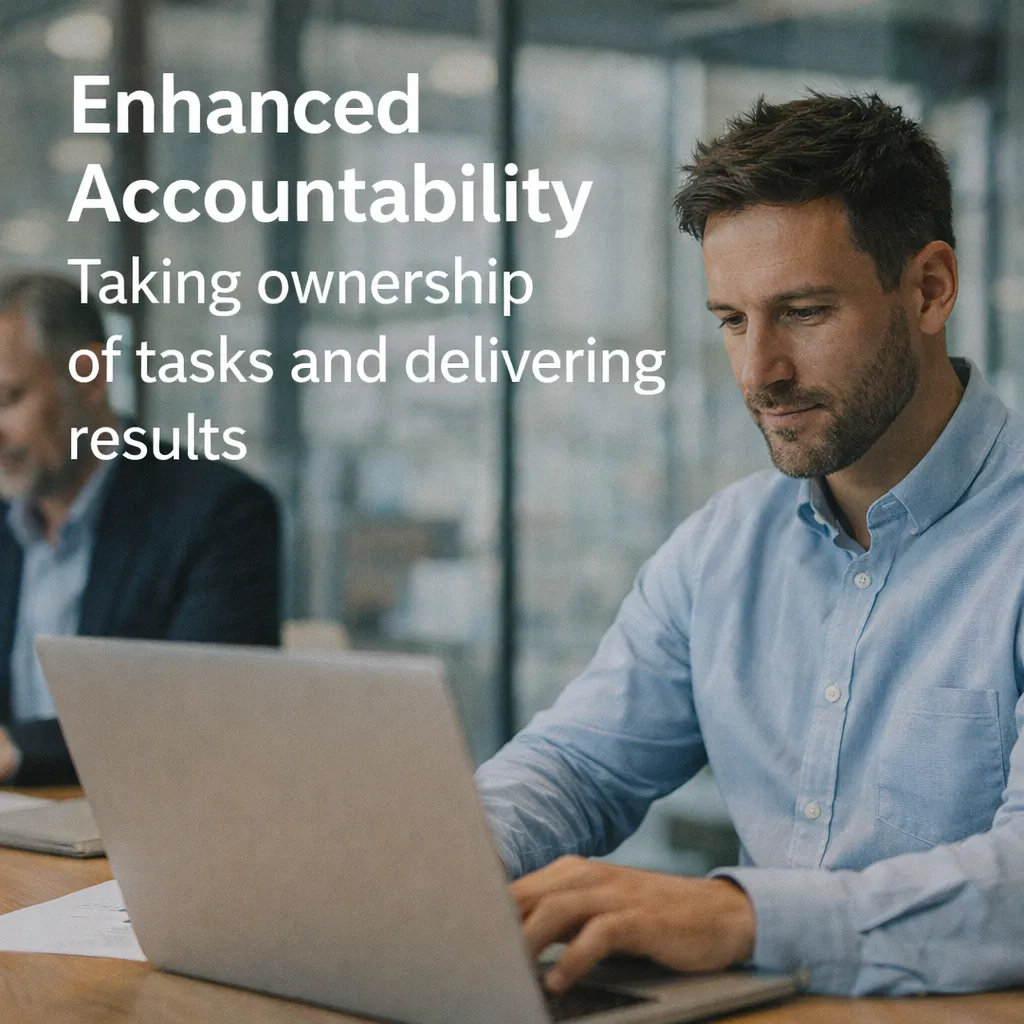
Enhanced Accountability: Taking ownership of tasks and delivering results
Why Results Improve When Ownership Becomes Non-Negotiable
Many organizations invest heavily in strategy, systems, and talent—yet still struggle with execution. Tasks are delayed. Accountability feels unclear. Results fall short despite high effort.
The issue is rarely a lack of capability. It is a lack of ownership.
This is whereEnhanced Accountabilitybecomes a defining factor in organizational performance.
What Accountability Really Means
Accountability is often misunderstood as control or pressure. In reality, true accountability is aboutownership—taking responsibility for outcomes, not just activities.
Enhanced accountability means:
Clear responsibility for tasks and decisions
Ownership of results, not excuses
Follow-through without constant supervision
Transparency in progress and performance
Commitment to deliver, even when challenges arise
When accountability is clear, execution becomes reliable.
Why Accountability Breaks Down
In many organizations, accountability weakens due to:
Unclear roles and overlapping responsibilities
Vague goals and success metrics
Too many approvals and unclear decision rights
A culture that avoids difficult conversations
Blame-focused environments instead of learning-focused ones
Leaders solving problems for teams instead of empowering them
The result is predictable: people stay busy, but outcomes remain inconsistent.
The Cost of Low Accountability
When accountability is weak, organizations experience:
Missed deadlines and delayed decisions
Rework caused by unclear ownership
Frustration among high performers
Reduced trust across teams
Slow execution of strategic initiatives
Leaders spending time chasing updates instead of leading
Over time, this erodes performance and morale.
How High-Performing Organizations Build Accountability
Enhanced accountability is not enforced—it isdesigned.
Leading organizations build accountability through:
Clear role definitionso everyone knows what they own
Well-defined goals and KPIsthat link effort to outcomes
Structured operating rhythmsfor follow-up and review
Decision clarityso ownership is not diluted
Operational Excellence practicesthat make performance visible
Leadership behaviorsthat model responsibility and consistency
Accountability works best when expectations are explicit and fair.
The Leadership Role in Accountability
Leaders set the tone. When leaders:
Clarify expectations upfront
Hold themselves accountable first
Address issues early and constructively
Focus on learning instead of blame
Reward ownership, not just effort
…teams respond with higher commitment and confidence.
Accountability becomes a shared value—not a compliance mechanism.
Accountability Drives Results, Not Fear
Strong accountability cultures do not create pressure—they createtrust.
When teams know:
What is expected
Why it matters
How success is measured
Who owns each outcome
They act with confidence, speed, and purpose.
Ownership replaces micromanagement. Clarity replaces confusion. Results replace excuses.
The Impact of Enhanced Accountability
Organizations that strengthen accountability achieve:
Faster execution and decision-making
More consistent delivery of results
Higher employee engagement
Stronger collaboration across teams
Reduced operational waste
Greater confidence during change
Because when people own their work, performance follows.
The Question Leaders Must Ask
Before launching the next initiative, ask:Is ownership clear—or are we assuming accountability will emerge on its own?
Accountability does not happen by chance. It is built through clarity, discipline, and leadership.
When accountability is enhanced, organizations don’t just work harder. Theydeliver better results—consistently.