


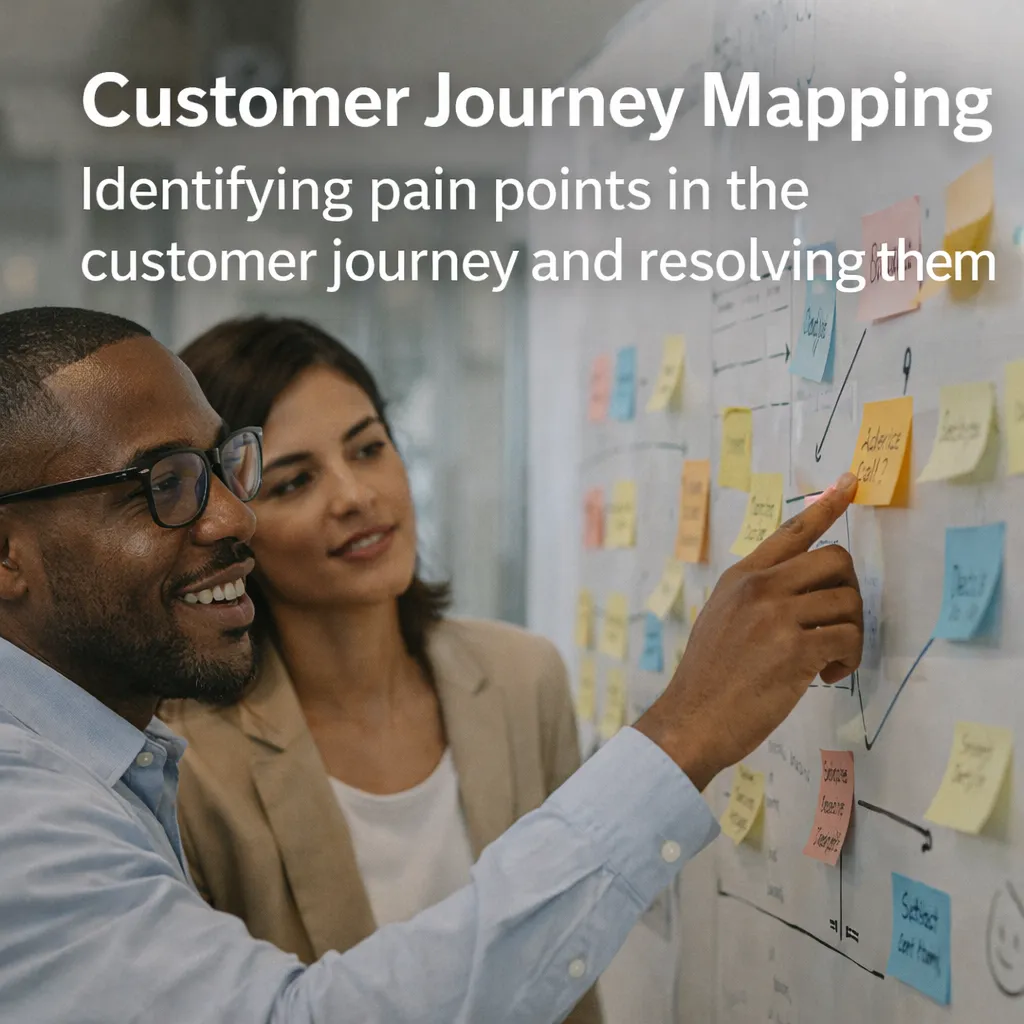
Customer Journey Mapping: Identifying pain points in the customer journey and resolving them
Why Customers Leave—And You Don’t See It Coming
Many organizations believe they understand their customers. They track satisfaction scores, monitor complaints, and invest in better products or services. Yet customers still disengage, switch providers, or quietly disappear.
The problem is rarely intent. It’s experience.
This is whereCustomer Journey Mappingbecomes a critical capability for modern organizations.
What Is Customer Journey Mapping—Really?
Customer Journey Mapping is the process of visualizing every interaction a customer has with your organization—from first awareness to long-term loyalty.
It captures:
What the customer does
What the customer thinks
What the customer feels
Where friction occurs
Where expectations are not met
Unlike internal process maps, journey maps are built from thecustomer’s perspective, not the organization’s.
Why Pain Points Often Go Unnoticed
Many customer pain points remain invisible because:
Teams focus on internal efficiency instead of customer effort
Processes are optimized in silos
Success is measured by outputs, not experiences
Customers adapt quietly instead of complaining
Data shows “what happened,” but not “how it felt”
What looks efficient internally may feel slow, confusing, or frustrating externally.
What Customer Journey Mapping Reveals
A well-built journey map exposes:
Long wait times hidden between steps
Unclear handoffs between departments
Repeated requests for the same information
Inconsistent communication
Breakdowns between digital and human interactions
Moments where trust is lost—or built
These insights shift conversations from assumptions to facts.
From Insight to Resolution
Identifying pain points is only the first step. High-performing organizations use journey mapping toresolve issues at the root, not just treat symptoms.
They:
Redesign processes to reduce customer effort
Clarify roles and ownership across touchpoints
Align teams around shared customer outcomes
Eliminate non-value-added steps
Improve communication timing and clarity
Use data and feedback to monitor improvement
The result is smoother journeys—not just better intentions.
Why Journey Mapping Drives Operational Excellence
Customer Journey Mapping bridges the gap betweencustomer experience and operations.
It helps organizations:
Align internal processes with customer expectations
Prioritize improvements that matter most
Reduce rework and inefficiency
Improve first-time-right performance
Strengthen cross-functional collaboration
In short, it connects how work is done with how value is experienced.
The Business Impact
Organizations that apply Customer Journey Mapping effectively achieve:
Higher customer satisfaction and retention
Faster issue resolution
Reduced complaints and escalations
Better employee clarity and alignment
More consistent service delivery
Stronger brand trust
Because customers don’t remember your internal structure. They remember how easy—or difficult—it was to work with you.
The Question Leaders Should Ask
Before investing in new tools, campaigns, or systems, ask:Do we truly understand where our customers struggle—and why?
Customer Journey Mapping doesn’t just improve experience. Itreveals how your organization really works.
And that insight is the foundation of meaningful, sustainable improvement.