


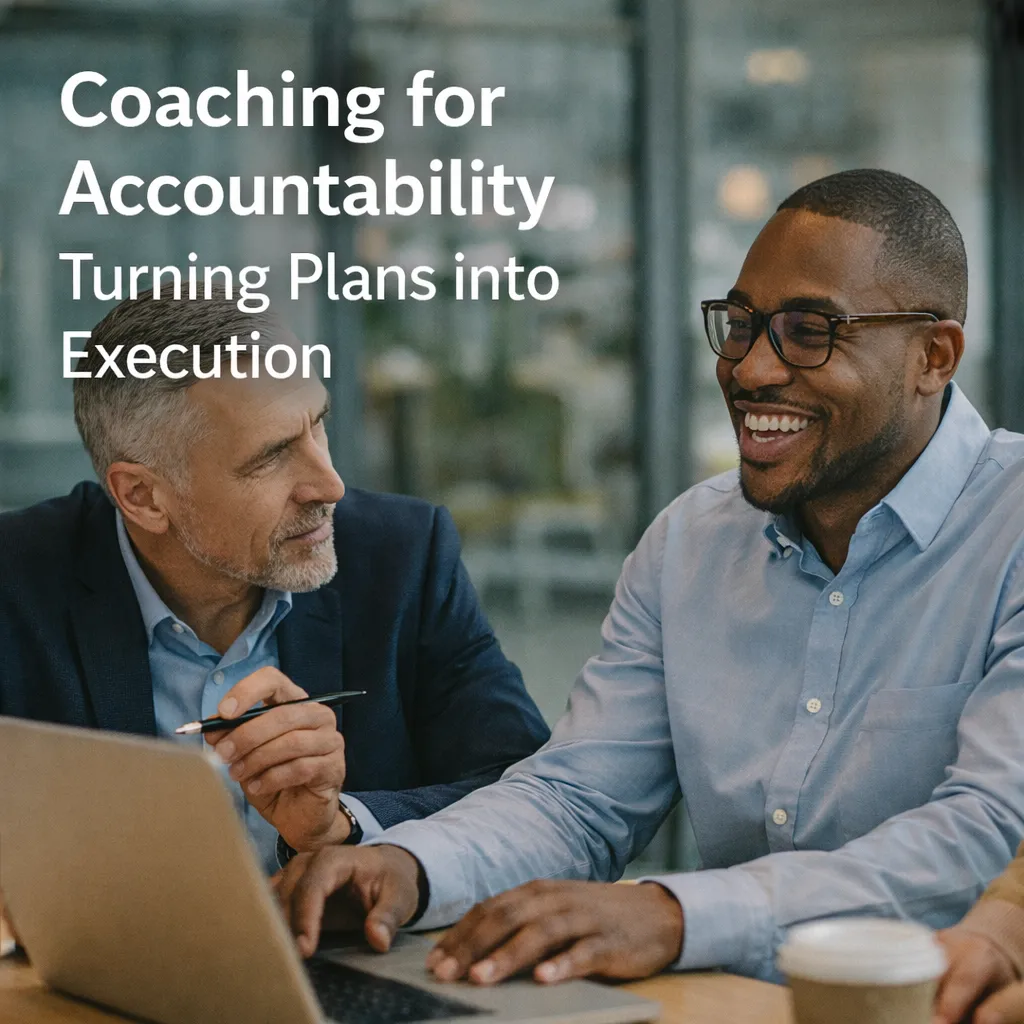
Coaching for Accountability: Turning Plans into Execution
Why Great Strategies Stall—and How Accountability Turns Plans into Results
Many organizations invest months crafting strategies, roadmaps, and action plans. The ideas are sound. The intent is strong. Yet execution stalls. Deadlines slip. Priorities shift. Results fall short.
The issue is rarely a lack of intelligence or effort.
It’s a lack of accountability in execution.
This is where Coaching for Accountability becomes a powerful differentiator.
What Accountability Really Means in Practice
Accountability is often misunderstood as control or pressure. In reality, true accountability is about ownership—owning commitments, decisions, and outcomes.
Coaching for accountability helps individuals and teams:
Translate plans into clear actions
Commit to realistic priorities
Take responsibility without fear
Follow through consistently
Address gaps early, not after failure
When accountability is clear, execution becomes reliable.
Why Plans Don’t Get Executed
Even the best plans fail when:
Responsibilities are unclear
Commitments are verbal but not owned
Follow-up is inconsistent
Leaders solve problems for teams
Progress is reviewed too late
Accountability feels punitive instead of supportive
Without coaching, accountability turns into blame—or disappears entirely.
How Coaching Changes Accountability
Coaching for accountability shifts the focus from enforcement to enablement.
Instead of asking: “Why didn’t this get done?”
Coaches ask: “What did you commit to—and what’s getting in the way?”
This approach:
Clarifies expectations upfront
Encourages honest dialogue
Builds trust and psychological safety
Reinforces responsibility without micromanagement
Keeps momentum alive
Accountability becomes a shared discipline, not a management burden.
What Coaching for Accountability Looks Like
Effective coaching for accountability includes:
Clear agreements on actions and outcomes
Visible commitments and timelines
Regular check-ins focused on progress
Constructive conversations about gaps
Support to remove obstacles
Reinforcement of ownership at all levels
Coaching doesn’t replace leadership—it strengthens it.
The Leadership Role in Accountability
Leaders play a critical role in shaping accountability culture.
Strong leaders:
Model ownership themselves
Make expectations explicit
Follow up consistently
Address issues early and respectfully
Focus on learning, not blame
Reward ownership, not just effort
When leaders coach accountability, teams respond with confidence and discipline.
The Business Impact of Accountability Coaching
Organizations that embed coaching for accountability experience:
Faster execution of initiatives
Clear ownership across teams
Fewer dropped priorities
Better decision-making
Higher engagement and trust
Reduced rework and firefighting
Stronger alignment between strategy and action
Plans stop living in slides—and start showing up in results.
From Planning to Performance
Coaching for accountability bridges the gap between:
Strategy and execution
Intention and action
Agreement and delivery
It ensures that plans don’t just sound good—but get done.
The Question Leaders Should Ask
Before launching your next initiative, ask: Do we have accountability by assumption—or accountability by design?
Because execution doesn’t fail from lack of plans. It fails when ownership isn’t coached, reinforced, and sustained.
That’s the power of Coaching for Accountability—turning plans into execution, and execution into results.